
Coronavirus Updates & Resources

Update: August 20, 2020

On August, 2020, Gloria Nelund, TriLinc Founder and CEO, and Paul Sanford, Chief Investment Officer, hosted our fourth webinar on COVID-19 and the financial markets. Click here to watch a replay.


Update: July 16, 2020

We have developed a general resource guide with information on data sources for macroeconomic data, COVID-19, global securities, and capital allocations.

Additionally, we have developed more specialized guides for Financial Advisors (or individuals in similar fields) to host their own virtual events for clients, family, and friends.

Click below to download a copy of our:


Update: May 6, 2020

On May 6, 2020, Gloria Nelund, TriLinc Founder and CEO, and Paul Sanford, Chief Investment Officer, hosted our third webinar on COVID-19 and the financial markets. Click here to watch a replay.


Update: April 16, 2020

On April 16, 2020, Gloria Nelund and Paul Sanford hosted our second webinar on COVID-19 and the financial markets. Click here to watch a replay.


Update: March 26, 2020

On March 26, 2020,  Gloria Nelund and Paul Sanford hosted our first webinar on COVID-19 and the financial markets. Click here to watch a replay.


Update: March 23, 2020

Coronavirus and TriLinc Portfolios

As noted in our update two weeks ago, while the short-term economic focus regarding COVID-19 was on China/Asia and supply chains, the larger effects to the world economy would likely be felt once the virus began affecting the EU and U.S., which collectively represent ~50% of global consumption/demand. As that has occurred over the past two weeks, there have been significant adverse effects on aggregate demand (see more below), which TriLinc is monitoring closely in order to have a clear understanding of how our borrower companies may be affected.


Supply (Chain) Considerations

  • According to Capital Economics, Chinese factory activity has continued to steadily recover from the lows of ~3 weeks ago, though aggregate activity appears to still be running ~30-40% below normal. This suggests that the base case of an initial short-term shock to supply, with a gradual multi-week recovery is playing out as expected. (As noted in our last update, TriLinc’s borrowers in Asia were expected to be only modestly affected by the disruption in the short-term, which is what we have seen in practice from borrowers in the region.)
  • Asian trade data appears to be following a similar steady, but gradual, upward trend after the initial significant drop seen at the end of February/beginning of March. (On its own, this is seemingly a good sign for TriLinc’s borrowers, suggesting that negative supply-side effects could be short-term in nature.)


Demand (Consumption) Considerations

  • Global demand is now the largest concern for policymakers around the world, as well as investors, with Capital Economics forecasting that most economies will see GDP levels down significantly by 10-20% in the first two quarters of 2020. Most of the GDP drop can be attributed to global efforts to contain COVID-19, including aggressive quarantines and social distancing policies that have required many service sector industries to close, with many others operating at minimal levels (see more below). (As noted in our last update, this is seen as the real risk to the global economy, as well as businesses everywhere. TriLinc is spending significant time in contact with its borrowers to ascertain what the magnitude of the demand shock is/will be to their businesses, and how best to provide the financing flexibility needed to manage through the current situation.)


High-Level Take-Aways

  • The choice of global governments to take very aggressive quarantine and social distancing public health measures has altered the effects of COVID-19 from at first resembling SARS, to now being in unprecedented economic territory (see more below).
  • Initial indicators of demand have dropped materially, as economic activity in many service sector industries has been reduced by an order of magnitude (e.g. 1/10th of prior output).
  • As mentioned in our previous update, authorities have taken health precautions extremely seriously, which is what has triggered the demand shock now taking place. It is critically important that governmental authorities provide fiscal stimulus to cushion the economic blow of their aggressive public health policies.
    • Global central banks have been appropriately vigorous in protecting the financial system, with the U.S. Federal Reserve playing a particularly important role in providing access to U.S. dollars (through swap lines), providing liquidity to the commercial paper market, and recently announcing programs to buy corporate bonds and securitized commercial and consumer loan pools. The ECB has announced further quantitative easing measures, including also buying corporate bonds to ensure (large) businesses have access to the financing and liquidity they require.
    • The pressure is now squarely on elected governments to compose, pass through their legislatures, and implement fiscal support on the scale to match the shock to aggregate demand. At the time of this writing, the U.S. currently has a nearly $2 trillion fiscal package being negotiated in Congress. However, time is of the essence and governments need to move much faster than they are accustomed to in order to mitigate the economic fallout of their aggressive public health policies.
  • The duration of the aggressive public health policies and the scale of the fiscal stimulus response will be determinative in how deep of an economic contraction the global economy experiences and, consequently, how quickly a recovery takes place.


General Economic Effects

Below is an update on the key data metrics that TriLinc is closely monitoring:

  • Purchasing Managers Index (PMI) and trade flow data updates, particularly for Asia. PMIs and trade flows can not only be used as an advance proxy for GDP, but also to better understand some of the deeper-company level effects that may be taking place.
    • According to Capital Economics, PMIs and trade flow data show that initial forecasts of a significant short-term disruption to regional output and trade, followed by gradual recovery, is taking place.
    • The risk has now shifted to how significantly reduced demand (particularly from the U.S. and EU) may hurt PMIs again, but now from a drop in demand vs. the initial shock to supply from Asian factory closures and restrained trade.
  • Economic activity in China. Even for investments with minimal direct exposure to the country (such as TriLinc’s), according to the IMF, China represents >15% of global GDP (2nd in the world after the U.S. at >23%) and is a major component of the global supply chain. A large and sustained slowdown in China will likely have significant ramifications for the global economy. According to Capital Economics:
    • Initial data indications from China suggest commercial activity dropped precipitously in the initial weeks following the COVID-19 outbreak.
    • However, activity in March shows commercial activity has bottomed, and a recovery is beginning.
      • Local policymakers are cautiously optimistic that virus has been largely contained; however, an uptick in new cases over the last week has reintroduced the risk that new cases could increase again.
  • Consumption data in the U.S and EU. has begun to track to the downside case. While China is ground zero for the supply side of global trade, the U.S. and EU drive the demand side. The U.S. and EU are the 1st and 2nd largest consumer markets globally, accounting for ~50% of global consumption, according to the World Bank.
    • The choice of policymakers to implement unprecedentedly aggressive quarantine and social distancing measures has had a devastating effect to spending/demand and early statistical results are alarming.
      • According to Capital Economics, initial jobless claims have surged to 8x the prior 4 week moving average with consumer confidence dropping more than 1/3rd.
  • Policy makers’ responses. Governments and central banks have the ability to cushion economic shocks through stimulative monetary and fiscal policy.
    • Monetary policy has been active early and often to keep the liquidity needed for the global economy to operate available.
    • Several fiscal stimulus packages have been announced, which is positive; however, much more remains to be done. The U.S. (first and foremost), the EU, and China are the governments with the fiscal firepower to deliver the size of stimulus likely required – estimates range globally from $5-10 trillion, based on a relatively short duration of the current aggressive quarantine and social distancing public health policies. Should businesses remain significantly restricted for longer, the economic risk of the drop in demand becoming self-reinforcing may increase materially, particularly through job losses and the bankruptcy of small and mid-size businesses.


In closing, we continue to closely monitor the COVID-19 situation and its potential effects in an effort to minimize disruptions to our borrower companies and safeguard our investors’ capital.


March 9, 2020

Brief on Coronavirus and TriLinc Portfolios

TriLinc has minimal direct exposure to the economic areas that appear to be suffering most (mainland China, S. Korea and Japan in Asia, and Italy and Iran in Europe/Middle East), but a short and sharp contraction in economic activity may have a transitory effect on our borrower companies.  If the panic passes relatively quickly (as with SARS), there doesn’t currently appear to be too much long-term risk for our borrowers.  However, if general economic activity deteriorates for an extended period of time, resulting in a severe global recession, everyone will be affected.

As TriLinc does not currently have significant exposure to the economies that appear to be directly affected most, our analysis is focused on second and third order effects (i.e. global trade flows and specific industries that may be more affected generally).  In addition to our macroeconomic reviews and analysis, TriLinc is in close contact with its local market investment partners in order to receive real-time feedback of effects on both local economies and our borrower companies.


Adverse Considerations

ECONOMIC
  • Many Chinese factories were shut for several weeks until just last week, when the first factories that had been closed re-opened.  (TriLinc has minimal direct exposure to China, and supply chains with links to Chinese factories can be managed by most TriLinc borrowers.)
  • Tourism in Asia appears to have been significantly affected, which hurts Thailand in particular because tourism is a significant portion of their economy.  (TriLinc has no direct exposure to Asian tourism-related industries.)
  • Trade (particularly in Asia) has likely fallen significantly in Q1 2020 – per Capital Economics, China-S. Korean trade is likely down by a large amount.  (This is the area that could affect TriLinc borrowers either directly or indirectly if it continues over time.  Again, real economic data won’t come out in meaningful amounts for the next few weeks.)


HUMAN BEHAVIOR
  • The SARS panic is understandably being used as a proxy for COVID-19, and short-term activity all but ceased in many parts of Asia during the SARS outbreak – well beyond logical/practical expectations.  If behavior this time mimics that of the SARS episode, there will likely be a severe contraction of regional economic activity for Q1.  (Again, it is important to emphasize economic data is measured and reported with a lag, so TriLinc is keeping close watch on the data to see if behavior follows the SARS episode.)


Favorable Considerations

ECONOMIC
  • Policy makers in the region have already responded in force.
    • Monetary stimulus:  China, Philippines, Thailand and Indonesia have already cut interest rates and S. Korea is expected to imminently.
    • Fiscal stimulus:  Singapore and Taiwan have already announced packages, and Indonesia, Hong Kong, Malaysia and S. Korea are expected to announce packages imminently.
  • China’s containment efforts (while drawing significant human rights criticisms) appear to be working and other countries are taking health precautions seriously.
    • This could shorten the duration of the expected economic contraction – though it could deepen it for a short period, if authorities use extremely conservative quarantine strategies.


HUMAN BEHAVIOR
  • Again, using SARS as the nearest and best current proxy, while people tend to panic and overreact in the short-run, the bounce back once the panic subsides also may be sharp.


High-Level Take-Aways

  • SARS is likely the best current proxy we have and it had a short, but sharp, contraction in economic activity with a relatively quick bounce back, as authorities got the situation under control and people recovered from initial panic.
  • Economic data is just beginning to come out; TriLinc is watching it closely to see how closely the COVID-19 outbreak ultimately resembles SARS.
  • If anything, authorities (especially China) are taking the coronavirus much more seriously than they initially took SARS, including:
    • how seriously the medical/quarantine aspects are being handled,
    • and economic policies (both monetary and fiscal) being implemented quickly
  • TriLinc has minimal direct exposure to the economic areas that appear to be suffering most (mainland China, S. Korea and Japan in Asia, and Italy and Iran in Europe/Middle East), but a short and sharp contraction in economic activity may have a transitory effect on our borrower companies.  If the panic passes relatively quickly (as with SARS), there doesn’t currently appear to be too much long-term risk for our borrowers.  However, if general economic activity deteriorates for an extended period of time, resulting in a severe global recession, everyone will be affected.


Along with our local Investment Partners who are on the ground, we continue to monitor the situation closely and will provide regular updates as available, so, please continue to check back.


General Economic Effects

It is important to note that economic activity affected by COVID-19 is taking place in real time, while economic data is being compiled, analyzed and reported with a lag.  Therefore, monitoring of the economic effects of the disease will be ongoing for an extended period of time.  That said, there are several economic indicators TriLinc is monitoring, including:

  • Purchasing Managers Index (PMI) and trade flow data updates, particularly for Asia. PMIs and trade flows can not only be used as an advance proxy for GDP, but also to better understand some of the deeper-company level effects that may be taking place.
    • While a significant amount of data is just being compiled and reported now, according to Capital Economics, initial readings of PMIs and trade flows suggest a significant short-term disruption to regional output and trade.
    • How long the decline is sustained will determine how impacted the global economy becomes. In prior health crises (e.g. SARS), initial contraction in economic activity and trade were significant, but so too was the rebound.
  • Economic activity in China. Even for investments with minimal direct exposure to the country (such as TriLinc’s), according to the IMF, China represents >15% of global GDP (2nd in the world after the U.S. at >23%) and is a major component of the global supply chain.  A large and sustained slowdown in China will likely have significant ramifications for the global economy.  According to Capital Economics:
    • Initial data indications from China suggest commercial activity dropped precipitously in the initial weeks following the COVID-19 outbreak.
    • However, early indications in March provide the possibility that commercial activity has bottomed, and a recovery is beginning.
    • The uptick in activity is believed to be driven by a large drop in new cases of COVID-19, suggesting China’s authorities may have been largely successful in their aggressive quarantine policies.
      • New cases of COVID-19 need to be watched closely to understand if commercial activity in China has, in fact, bottomed with a sustained recovery initially underway.
  • Consumption data in the US and EU as COVID-19 plays itself out globally. While China is ground zero for the supply side of global trade, the U.S. and EU drive global consumption (1st and 2nd largest consumer markets globally, accounting for ~50% of global consumption, according to the World Bank), which drives demand.
    • At this point, it is too early to tell what effect COVID-19 will have on U.S. and EU global trade demand/consumption, but these indicators should be watched closely.
  • Policy makers’ responses. Governments and central banks have the ability to cushion economic shocks through stimulative monetary and fiscal policy.
    • Asian economies have been quick to announce aggressive policy responses, particularly China, Hong Kong, Indonesia, Malaysia, S. Korea, Philippines, Singapore, Taiwan and Thailand.
    • The G7 also announced they are committed to “use all appropriate policy tools to achieve strong, strong, sustainable growth and safeguard against downside risks”.


In closing, we are closely monitoring the COVID-19 situation and its potential effects in an effort to minimize disruptions to our borrower companies and safeguard our investors’ capital.


Additional Information on Coronavirus

The coronavirus, which was first reported in China in late 2019 and is named “SARS-CoV-2” – but is also known by the name of the illness it generates, “COVID-19” – is from a family of viruses that include other well-known viruses, such as SARS (first reported in 2003) and MERS (first reported in 2012).  For purposes of this note, we refer to the illness as “COVID-19”, though some other sources may use COVID-19, SARS-CoV-2, and “the coronavirus” interchangeably.


Health and Safety Information

The U.S. Centers for Disease Control (CDC) maintains an active webpage for COVID-19, which contains:

  • background information,
  • the source and spread of the virus,
  • a summary of the current the situation in the U.S.,
  • severity of the illness,
  • an assessment of public health risk,
  • potential paths the disease could take,
  • the CDC’s response,
  • CDC’s recommendations, and
  • other available resources for more information.


Additional Commentary from McKinsey & Company:

McKinsey & Company maintains a webpage with insights into the coronavirus outbreak and its impacts on the global economy. Click to read COVID-19: Implications for business.

DISCLAIMER

The statements and opinions expressed in this article are those of the McKinsey & Company. The information contained in this article is distributed for informational purposes only and should not be considered investment advice or a recommendation of any particular security, strategy, or investment product. Information contained herein has been obtained from sources believed to be reliable, but not guaranteed. TriLinc cannot guarantee the accuracy or completeness of any statements or data. The information contained in this article is accurate as of the date submitted but is subject to change.
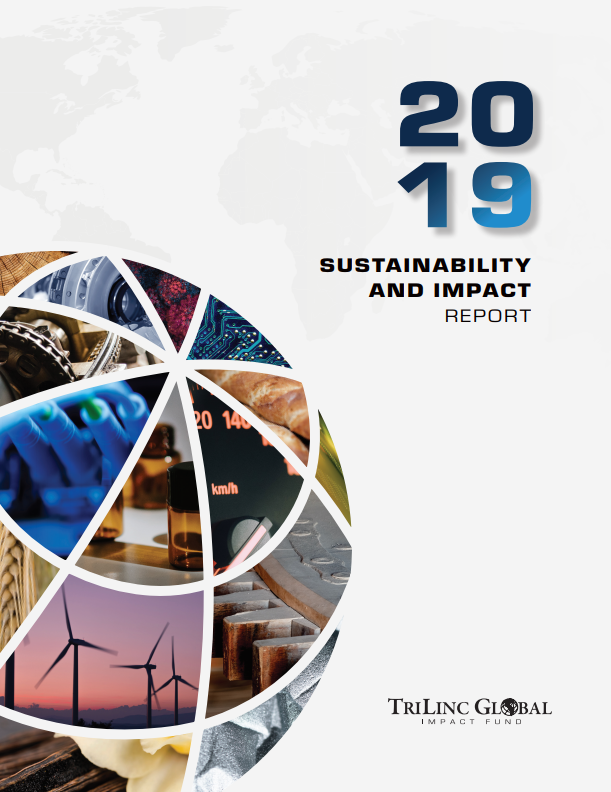

2019 TGIF Sustainability & Impact Report

The TriLinc Global Impact Fund 2019 Sustainability & Impact Report provides an overview of investment activity from June 2013 to December 2019 (the “Reporting Period”), and offers evidence through numerous case studies as to how TGIF’s small and medium enterprise (“SME”) borrower companies are helping to contribute to the economic, social, and environmental well-being of their communities.
 

To download a copy of the report, please click here.

TriLinc Global Becomes Signatory to the IFC’s Impact Principles

MANHATTAN BEACH, Calif.–(BUSINESS WIRE)–TriLinc Global, LLC (“TriLinc”) joined leading impact asset owners and asset managers to become a signatory to the International Finance Corporation’s “Operating Principles for Impact Management”. The operating principles provide greater discipline, standardization, and transparency in impact management and measurement throughout the investment lifecycle. They are intended to foster increased mobilization of capital for impact and provide a high standard for the social and environmental impact within impact investing.

“We are honored to be a signatory to the operating principles launched by the World Bank Group’s International Finance Corporation,” commented Gloria Nelund, CEO and Founder of TriLinc Global, LLC.

“These principles support our mission to harness the power of capital markets in solving global challenges facing our society.”


About TriLinc Global

TriLinc Global (www.trilincglobal.com)

TriLinc Global is an impact investing fund sponsor with a mission to link market-rate returns, positive impact, and scalable solutions. Through its registered investment advisor subsidiaries, TriLinc Global has invested over $1 billion in private debt globally and seeks to demonstrate the power of the capital markets in helping solve some of the world’s pressing socioeconomic and environmental challenges. TriLinc Global funds provide growth-stage loans and trade finance to established and small and medium enterprises (“SMEs”) in select developing economies where access to affordable capital is limited. Borrower companies must demonstrate the ability to pay market rates, pass TriLinc Global’s environmental, social, and governance (ESG) screens, and commit to tracking and reporting on self-identified impact metrics.

TriLinc Global complements its global macroeconomic portfolio organization and management with investment services from experienced investment partners that have established track records in target asset-classes and geographies, and access to a high-quality investment pipeline.


About the International Finance Corporation

International Finance Corporation (www.ifc.org)

The IFC is a member of the World Bank Group and is headquartered in Washington D.C. It was established in 1956 as the private-sector arm of the World Bank Group to advance economic development by investing in for-profit and commercial projects for poverty reduction and promoting development. By giving loans and offering advice and training in both the private and public sectors, the IFC aims to eliminate poverty by helping people help themselves. The IFC serves two mandates: to end extreme poverty, by reducing the share of the global population that lives in extreme poverty to 3% by 2030, and to promote shared prosperity, by increasing the incomes of the poorest 40% of people in every country.


DISCLAIMER

This information is for general purposes only and does not represent a recommendation or offer of any particular security, strategy, or investment. Amount invested represents current amount financed in term loans, trade finance, and short-term notes since 2013. There is no guarantee that TriLinc’s investment strategy will be successful or will avoid losses. Investment in a pooled investment vehicle involves significant risk including but not limited to: units are restricted; no secondary markets; limitation on liquidity; transfer and redemption of units’ distribution made many not come from income, and if so will reduce the returns; are not guaranteed and are subject to board discretion. TriLinc Global is dependent upon its advisors and investment partners to select investments and conduct operations. TriLinc Global is not suitable for all investors. TriLinc Global, LLC (“TLG”) is a holding company and an impact fund sponsor founded in 2008. TriLinc Advisors, LLC (“TLA”) and TriLinc Global Advisors, LLC (“TLGA”) are wholly owned subsidiaries of TLG. TLA and TLGA are SEC registered investment advisors. Securities offered through CommonGood Capital, LLC, Member FINRA/SIPC. Registration and memberships do not indicate a certain level of skill, training, or endorsement by the SEC, FINRA, or SIPC.

Second in a Series: COVID-19 Webinar Replay


On April 16, 2020,  Gloria Nelund, Founder and CEO of TriLinc Global, and Paul Sanford, Chief Investment Officer, hosted our second webinar on COVID-19 and the financial markets.

The webinar offered commentary on the coronavirus’s current and potential impacts on TriLinc’s portfolios and the financial markets, followed by a Q&A. This series serves as a complement to TriLinc’s Coronavirus Update webpage.

Click here to download a copy of the webinar deck.

First in a Series: COVID-19 Webinar Replay


On March 26, 2020,  Gloria Nelund, Founder and CEO of TriLinc Global, and Paul Sanford, Chief Investment Officer, hosted a webinar on COVID-19 and the financial markets.

The webinar offered commentary on the coronavirus’s current and potential impacts on TriLinc’s portfolios and the financial markets, followed by a Q&A. This webinar serves as a complement to TriLinc’s Coronavirus Update webpage.

Click here to download a copy of the webinar deck.

Emerging Markets Private Credit: Why Now? Webinar Replay

On February 20, 2020,  Gloria Nelund, Founder and CEO of TriLinc Global, and Paul Sanford, Chief Investment Officer, hosted an educational webinar – Emerging Markets Private Credit: Why Now?

The webinar covered several topics, including:

  • The Case for Emerging Markets
  • Why Private Assets in Emerging Markets?
  • Diversification
  • Opportunities for Impact
  • Why Now?
Click here to download a copy of the webinar deck.

GIIN Releases New Report: The State of Impact Measurement and Management Practice

The Global Impact Investing Network has just published the Second Edition of The State of Impact Measurement and Management (IMM) Practice. Based on data from 278 impact investors, it provides the most comprehensive view of how impact investors measure their social and environmental impact. It also analyzes trends and changes in IMM practice over the past two years, looking at data from 109 two-year repeat respondents. The report indicates that impact investors universally agree on the importance of measuring and managing their impact as an industry imperative and are growing increasingly sophisticated at IMM, shifting their focus towards driving greater impact results.

Learn about the state of IMM practice here.


About the GIIN

The Global Impact Investing Network (GIIN) is the global champion of impact investing, dedicated to increasing its scale and effectiveness around the world. Impact investments are investments made into companies, organizations, and funds with the intention to generate positive, measurable social and environmental impact alongside a financial return. Impact investments can be made in both emerging and developed markets and target a range of returns from below market to market rate, depending upon the circumstances. The GIIN builds critical infrastructure and supports activities, education, and research that help accelerate the development of a coherent impact investing industry. For more information, please visit https://thegiin.org/.


DISCLAIMER

The information contained in this report is distributed for informational purposes only and should not be considered investment advice or a recommendation of any particular security, strategy or investment product. Information contained herein has been obtained from sources believed to be reliable, but not guaranteed. TriLinc cannot guarantee the accuracy or completeness of any statements or data. The information contained in this report is accurate as of the data submitted but is subject to change.

How To Invest In Companies That Pay Employees Well, Clean Up The Environment, And Care About The Future

The following article was originally published by Dustin Clendenen on the Business Insider website. Click here to view.


  • The impact investing market has grown to over $500 billion, making it a mainstream way to diversify your investment portfolio.
  • Many companies have sprouted up in the past decade focusing solely on impact investing, such as TriLinc Global, CleanFund, and SustainVC.
  • However, mainstream legacy brokers like E*TRADE, Charles Schwab, and even BlackRock have taken up the torch to offer their own impact investing solutions.
  • Wealthsimple and Ellevest are two robo-advisers that can help you get started in impact investing »

Money is speech. On some level you know this. It’s why the meme, “Shut up and take my money” resonates with so many people. The phrase is a way of saying you love something — and you eagerly relinquish your cash in reverence.

Wall Street makes a statement about its values every time it invests in companies that focus more on the bottom line than they do on human rights or sustainability.

But consumers are becoming more and more interested in socially conscious businesses — businesses that pay employees well, don’t pollute and even actively clean up the environment, and that operate with a sustainable future in mind. And more and more, the financial sector is starting to care as well.


What is impact investing?

Donating to charity isn’t the only way your money can make the world a better place. According to the Global Impact Investing Networkimpact investments are “investments made with the intention to generate positive, measurable social and environmental impact alongside a financial return.” By the end of 2018, the global market for impact investing had grown to over $500 billion.

When you invest for impact, it means you buy shares in a company that’s designed to have a positive effect on society.

These companies have a “double bottom line,” focused both on turning a financial profit and making a measurable, positive impact on a social need in the process. This could be through generating renewable energy, making only eco-friendly and sustainably produced products, or financially empowering workers in emerging economies.

Social impact companies are incredibly diverse. Thrive Market, an e-commerce site focused entirely on organic and sustainable groceries, falls into the social impact category, but so does Watsi, an app for crowdfunding healthcare, and The Ocean Cleanup, an enterprise dedicated to developing techniques and technology that can rid the ocean of plastic waste.

Impact investing is still an emerging field with kinks being worked out by the industry, but so far, the majority of returns (both financially and socially) on these investments meet or exceed investor expectations. In other words, it’s safe and profitable for you to invest in social impact.


How to get started with impact investing

If you’re even researching how to get involved in impact investing, you probably already know what causes you want to fight for and what social issues you want to see solved.

Whatever your cause is, there are companies out there doing amazing work, and many of them are publicly traded.

If you hear about a new social enterprise in the news that catches your attention, chances are the reason it’s making headlines is because it’s doing a round of funding. Do some digging and see if would be possible for you to contribute.

If you don’t have the time or confidence to vet companies that are both genuinely making a difference and worthy of your investment, there are also more managed and robo funds than ever to utilize, many with options to invest your dollars directly into the causes you cherish.


Where to put your money

A number of companies have been established in the last decade that focus solely on impact and socially conscious investing.

Based in California, CleanFund has become a leader in providing long-term financing for residential and commercial property improvements that increase energy efficiency, water conservation, and renewable energy compatibility.

TriLinc Global has provided a vehicle for investors to fund social enterprises in markets all around the world, in alignment with the UN’s Sustainable Development Goals.

Bamboo Capital Partners offers an incredibly diverse array of companies in its portfolio that span energy, healthcare, housing, financial inclusion, and education.

Sustain VC invests seed money in early-stage, high-impact companies and continues to actively engage with them throughout their growth and development, almost like an incubator.

The $500 billion impact-investing market has grown so influential that even the major legacy funds and financial institutions have gotten involved.

E*TRADE prominently features options for socially conscious investments in every one of its portfolio options.

Charles Schwab offers clients a list of socially conscious ESG funds available from third-party providers, which allow them to invest in companies based on causes such as environmental sustainability, social justice, and ethical governance (avoiding problematic lobbying and concerns of that nature).

Wealthsimple provides hands-on tools for conscious investors to build their own socially responsible indexes, focusing on issues like reducing carbon and supporting clean tech, plus areas like local initiatives and endeavors to provide affordable housing.

Ellevest offers an impact investing portfolio that focuses on companies that actually advance women: as business owners, as community leaders, and as social entrepreneurs on the frontline of the fight against climate change.

TD Ameritrade now offers a range of “socially aware portfolios” that allow users to custom-tailor their investments to their values.

Even BlackRock has joined in on the action, creating funds and investment vehicles that align with well-recognized social impact goals, such as advancing the UN’s Sustainable Development Goals and reducing carbon footprint.

Options for impact investing are now so prolific that you don’t even have to have a cause you support to justify social responsibility — it’s now a mainstream way to diversify your portfolio.


Disclosure from Business Insider: This post is brought to you by the Personal Finance Insider team. We occasionally highlight financial products and services that can help you make smarter decisions with your money. We do not give investment advice or encourage you to adopt a certain investment strategy. What you decide to do with your money is up to you. If you take action based on one of our recommendations, we get a small share of the revenue from our commerce partners. This does not influence whether we feature a financial product or service. We operate independently from our advertising sales team.

Disclosure from TriLinc Global: This article contains the current, good faith opinions of the author but not necessarily those of TriLinc Global, LLC and its subsidiaries (“TriLinc”). The information contained in this article is distributed for informational purposes only and should not be considered investment advice or a recommendation of any particular security, strategy or investment product. Information contained herein has been obtained from sources believed to be reliable, but not guaranteed.

TriLinc is Now Compliant with GIPS®

TriLinc is Now Compliant with GIPS®

Effective October 21st, 2019 TriLinc Global, LLC claims compliance with the Global Investment Performance Standards (“GIPS®”). The GIPS are voluntary standards based on the fundamental principles of full disclosure and fair representation of investment performance results. The GIPS standards are administered globally by the CFA Institute. To learn more about GIPS®, click here. To receive GIPS compliant performance information for TriLinc’s offerings, please contact info@trilincglobal.com.


GIPS® is a registered trademark of the CFA Institute. The CFA Institute does not endorse or promote TriLinc, nor does it warrant the accuracy of quality of the content contained herein.

TriLinc Adds New Asia Investment Partner

MANHATTAN BEACH, Calif.–(BUSINESS WIRE)–TriLinc Global, LLC (“TriLinc”) announced today the approval of CLSA Capital Partners’ Lending Ark Strategy (“Lending Ark”) as a new term loan investment partner for business expansion and socioeconomic development in Southeast Asia. “We are very excited about our partnership with Lending Ark for broadening our existing term loan investment capabilities throughout Asia,” commented Gloria Nelund, CEO and founder of TriLinc Global, LLC. “International trade has the potential to deliver important short, medium, and long-term economic development benefits for small and medium enterprises (“SMEs”) and the communities in which they operate, and Lending Ark’s in-country networks, market knowledge, and institutional quality approach to portfolio management aligns with TriLinc’s goal to continue delivering risk-adjusted returns to our investors while creating positive, measurable impact in communities across the globe.”

“International trade has the potential to deliver important short, medium, and long-term economic development benefits for small and medium enterprises (“SMEs”).

Gregory Park, Managing Director, CLSA Capital Partners and Head of Lending Ark Strategy said: “Lending Ark is honored to collaborate with TriLinc to create impactful, capital access solutions to the highest quality issuers servicing the fast-growing ASEAN region of over 700 million consumers and small businesses. With the stable, secured current income strategy, as well as regional asset-backed lending & asset management expertise CLSA Capital Partners’ Lending Ark Strategy offers, we align perfectly with TriLinc’s developmental mission.”


About TriLinc Global, LLC

TriLinc Global (www.trilincglobal.com)

TriLinc Global is an impact investing fund sponsor with a mission to link market-rate returns, positive impact, and scalable solutions. Through its registered investment advisor subsidiaries, TriLinc has invested over $1 billion in private debt transactions globally and seeks to demonstrate the power of the capital markets in helping solve some of the world’s pressing socioeconomic and environmental challenges. TriLinc Global’s funds provide growth-stage loans and trade finance to established SMEs in select developing economies where access to affordable capital is limited. Borrower companies must demonstrate the ability to pay market rates, pass TriLinc Global’s environmental, social, and governance (“ESG”) screens, and commit to tracking and reporting on self-identified impact metrics.

TriLinc Global complements its global macroeconomic portfolio organization and management with investment services from experienced investment partners that have established track records in target asset classes and geographies, and access to a high-quality investment pipeline.


About CLSA Capital Partners

CLSA Capital Partners(www.clsacapital.com)

CLSA Capital Partners is the alternative asset management business of CLSA, one of Asia’s leading capital markets and investment groups. Established in 1995, CLSA Capital Partners manages a diversified range of strategies including private equity, real estate, credit and transportation-and-real asset. From eight offices across Asia-Pacific including Hong Kong, Singapore, and Tokyo, the firm’s experienced investment teams aim to generate attractive returns for clients while ensuring sustained value creation for portfolio companies.


About Lending Ark

CLSA Capital Partners’ Lending Ark Strategy invests in high quality, secured private debt opportunities across Asia, Australia, and New Zealand. Lending Ark invests in privately negotiated, three to five year maturity, secured private debt financing, senior/mezzanine tranches of asset-based securities and bank collateralized obligations.

Lending Ark’s strategy is to generate steady current income while capturing the opportunity that arises from the imbalance between the growing credit demand for credit issuers serving the Asian middle class and the shrinking supply of credit available from banks due to capital constraints. This market dislocation of capital creates a credit vacuum that allows the Lending Ark team to originate, structure and invest in privately negotiated secured debt instruments across select jurisdictions and asset classes.


DISCLAIMER

This information is for general purposes only and does not represent a recommendation or offer of any particular security, strategy, or investment. Amount invested represents current amount financed in term loans, trade finance, and short-term notes since 2013. There is no guarantee that TriLinc’s investment strategy will be successful or will avoid losses. Investment in a pooled investment vehicle involves significant risk including but not limited to: units are restricted; no secondary markets; limitation on liquidity; transfer and redemption of units’ distribution made may not come from income and if so will reduce the returns; are not guaranteed and are subject to board discretion. TriLinc Global is dependent upon its advisors and investment partners to select investments and conduct operations. TriLinc Global is not suitable for all investors. TriLinc Global, LLC (“TLG”) is a holding company and an impact fund sponsor founded in 2008. TriLinc Advisors, LLC (“TLA”) and TriLinc Global Advisors, LLC (“TLGA”) are wholly owned subsidiaries of TLG. TLA and TLGA are SEC registered investment advisors. Securities offered through CommonGood Securities LLC, Member FINRA/SIPC. Registration and memberships do not indicate a certain level of skill, training, or endorsement by the SEC, FINRA, or SIPC.

Contacts

Robert Kronman – Director of Marketing
rkronman@trilincglobal.com
(o) 424 200 6202
(c) 310 497 2116